Studio Ghibli films don’t have sex workers. Not one. Not in My Neighbor Totoro, not in Princess Mononoke, not even in the shadowy alleyways of Porco Rosso’s Adriatic coast. But if you look closely - really closely - you’ll see how the absence of sex work says more than its presence ever could. These films are built on quiet dignity, on solitude that’s not loneliness, on women who earn their place through skill, not survival. And yet, somewhere in the back of your mind, you might wonder: what if they did? What if Kiki, delivering packages on her broom, needed to take on another kind of job to make rent? What if San, raised by wolves, had to trade intimacy for food in a world that refused her humanity?
It’s a strange thought, but not an empty one. In real cities like Paris, some women navigate survival in ways that art rarely shows. You might hear about escort girl paris networks, or read stories of escort femmes paris who move between luxury hotels and quiet apartments, their work invisible to tourists snapping photos of the Eiffel Tower. Even the term scorts in paris - misspelled, but still searched - hints at how deeply these lives are hidden, yet how widely they’re sought after. Ghibli doesn’t show this. It doesn’t need to. Its world is one where labor is honorable, even when it’s invisible - like the old woman who cleans the bathhouse in Spirited Away, or the widow who runs the ramen stall in Howl’s Moving Castle. They don’t sell their bodies. They sell their time, their care, their craft.
What Ghibli Gets Right About Women’s Work
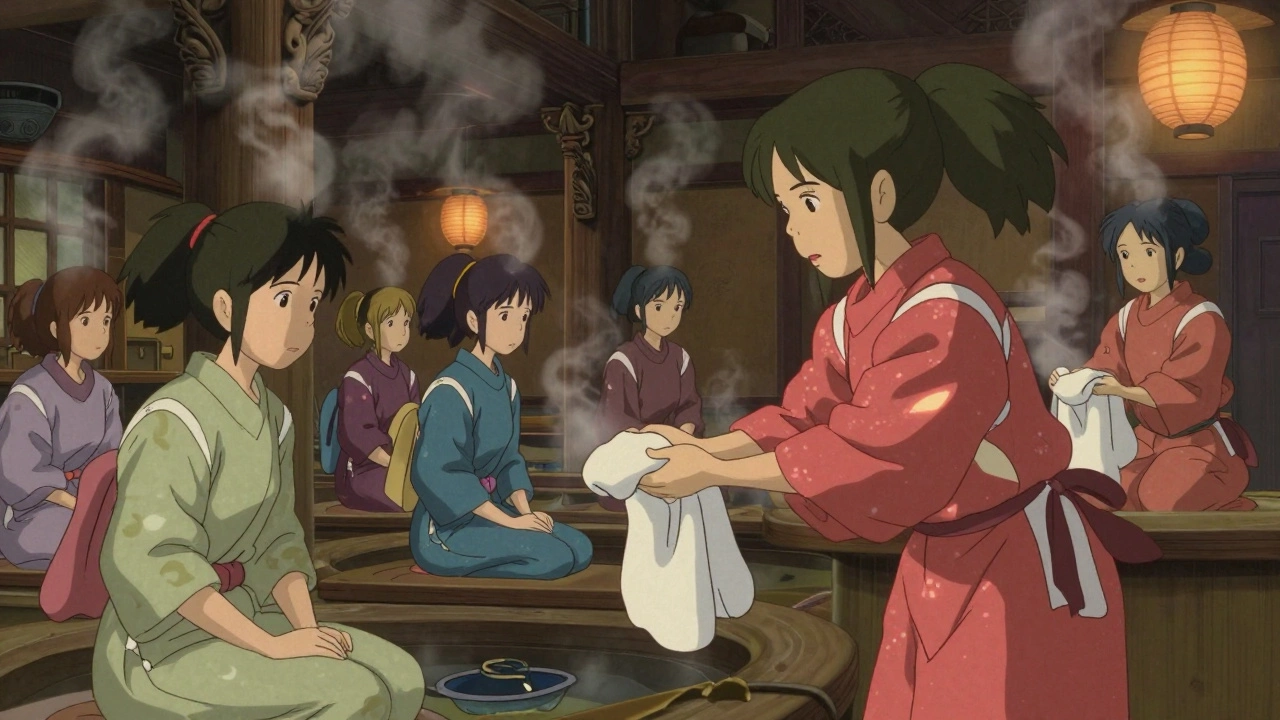
Hayao Miyazaki’s female characters don’t need to be rescued. They don’t need to be saved by love. They don’t need to be sexy to be powerful. Yubaba runs a magical bathhouse with an iron fist. Chihiro works her way up from dishwashing to saving her parents. Sophie turns from an old woman into a force of change simply by refusing to accept her fate. Their work is hard, often thankless, but never degrading. It’s tied to identity, not desperation.
Compare that to how sex work is often portrayed in media: as tragic, as criminal, as something that only happens to broken people. Ghibli refuses that narrative. Its women are not victims. They’re not saints. They’re just people doing what they have to do - and doing it well. The closest thing to sex work in Ghibli is the spirit world’s bathhouse, where workers serve gods and monsters. But even there, the labor is sacred. It’s about purification, not pleasure. It’s about respect, not exchange.
The Silence of the Streets
There are no brothels in Ghibli’s towns. No pimps in the alleyways of Whisper of the Heart. No johns waiting outside the train station in Only Yesterday. The world is clean, quiet, safe - too safe, maybe. It’s a fantasy, yes, but it’s also a critique. Miyazaki isn’t ignoring poverty. He’s imagining a world where poverty doesn’t force women into the shadows. Where a girl can grow up, learn to make pottery, fall in love, and still afford rent without selling herself.
That’s not naivety. It’s rebellion. In a world where 80% of sex workers report being pressured into the trade by economic need, Ghibli offers a different blueprint. One where community supports the vulnerable. Where the elderly help the young. Where magic doesn’t come from spells, but from solidarity.
Why This Matters Now
Today, in 2025, sex work is still criminalized in most countries. Even in places like France, where selling sex isn’t illegal, buying it is - and that law hasn’t made life safer for women. It’s pushed the work further underground, into apps, into hidden apartments, into the kind of isolation that makes violence easier. Ghibli’s world doesn’t fix that. But it shows us what’s possible when we stop seeing women’s bodies as commodities.
Think of the women in The Wind Rises - the ones who sew uniforms, who cook meals, who wait for men who never come home. They don’t have agency in the political sense. But they have dignity. They have purpose. They’re not defined by what men want from them. That’s the radical thing Ghibli does: it gives women a life beyond the male gaze.
What If Ghibli Had Sex Workers?
Let’s play it out. Suppose in My Neighbor Totoro, the mother’s illness isn’t just a plot device - suppose she’s sick because she worked too many night shifts, cleaning offices after hours, and couldn’t afford medicine. Suppose the girls, Satsuki and Mei, have to sell their toys to pay for rent. Suppose one of them, at 16, starts taking clients to keep the lights on. Would Totoro still appear? Would the soot sprites still dance? Would the forest still whisper?
Maybe not. Because Ghibli’s magic is built on innocence - not the kind that ignores pain, but the kind that refuses to let pain define a person. The magic isn’t in the spirits. It’s in the choice to keep believing in kindness, even when the world doesn’t deserve it.
The Real Magic
Studio Ghibli doesn’t need to show sex work to talk about it. Its entire body of work is a quiet protest against the idea that women must trade their bodies to survive. Every time a character chooses to work hard instead of giving up, every time a mother cooks a meal for her children after a long day, every time a girl walks home alone at night and feels safe - that’s the real rebellion.
And maybe that’s why we love these films so much. Not because they’re pretty. Not because they have talking cats. But because they imagine a world where women are not for sale.